From UX vision to an educational trainer
How crafting a strategic UX vision uncovered an unmet need, and led to a scalable platform for independent learning.
Setting the strategic direction
- Design decisions were being made without enough contact with end users. I pushed for structurally more school visits and user conversations, so the team spent more time with real users.
- Over the course of a year, I personally visited 8 schools, encouraged team members to visit schools too, and we ran structured online conversations. Altogether, that added up to roughly 70 hours of user contact.
- The result was a UX vision, told as a story from the teacher's perspective: a future where all current frustrations are resolved. This story was printed and hung in the office, giving the entire team a shared picture of where we were heading.


Two spreads from the UX vision story. It's told from the teacher's perspective and paints a future where students learn independently and teachers have time for personal attention.
The discovery
- The school visits revealed something invisible in our own data: teachers were using all kinds of separate practice software alongside Gynzy, especially for recurring learning goals like multiplication tables and verb spelling.
- Beyond regular exercises, students needed a way to practice that was playful and motivating: independently, at their own level.
- This insight would never have surfaced from feature requests or usage data alone. It's exactly why we do ethnographic research: you have to be in the classroom to see what your data can't show you.
Designing the foundation
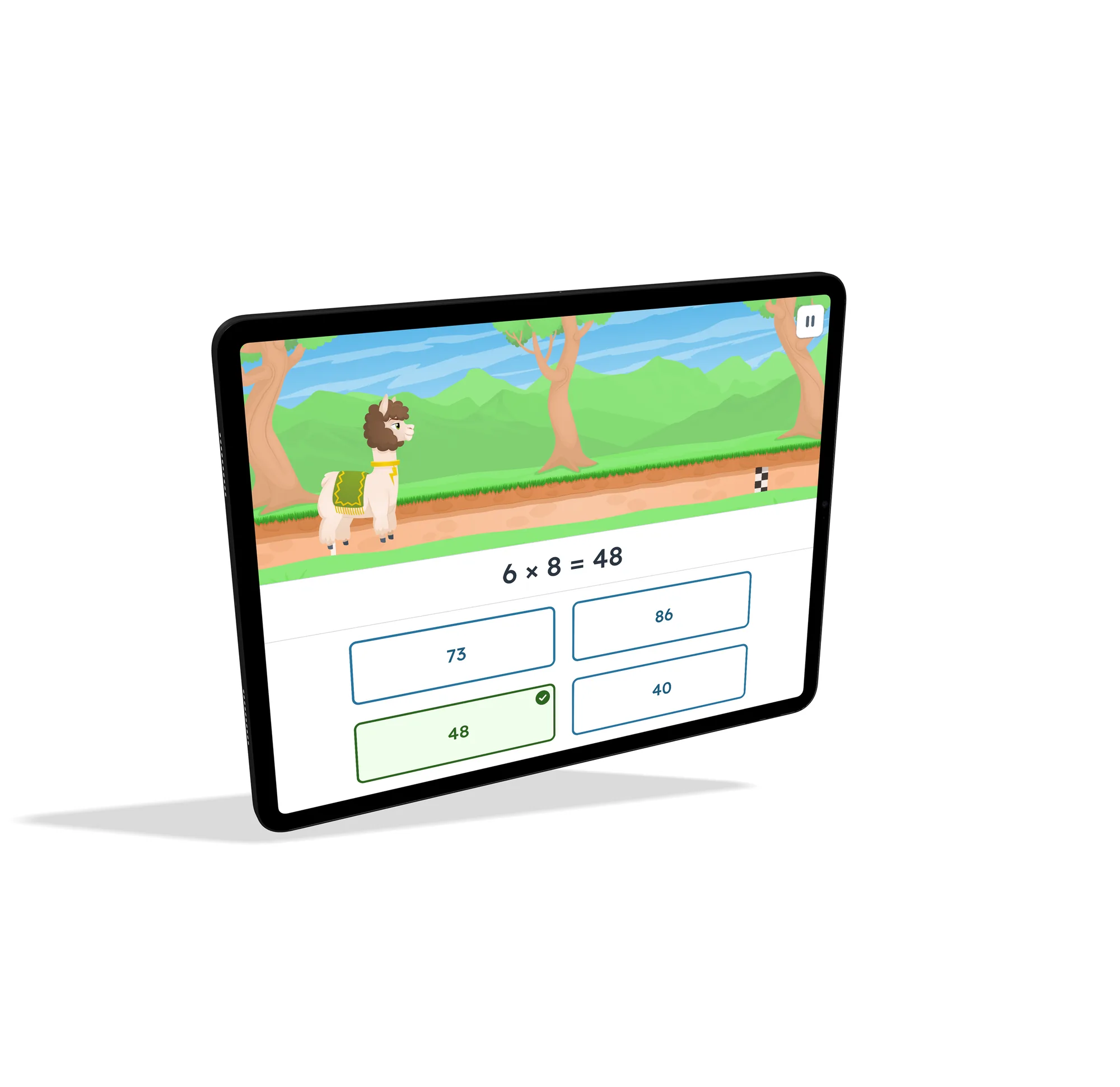
- Gynzy already had a popular classroom feature: the Alpaca Race. The class splits into two teams and races by answering math facts as fast as possible. A proven concept, and a safe foundation to build on.
- The first step was turning this into a single-player variant, so students could also practice independently. Same proven concept, new format.
- From the start, the architecture was designed to scale along three axes: more interaction types (from multiple choice to fill-in-the-blank and beyond), more learning goals per type, and eventually more subject areas.
- Deliberate scope choices: assigning learning goals to students and showing results to teachers were descoped to ship fast.
- Everything had to be built in Flutter for the student environment, which the design system wasn't ready for yet. So this work ran in parallel with the evolution of the design system.
Alpaca Trainer: single-player math facts with multiple choice
Scaling up
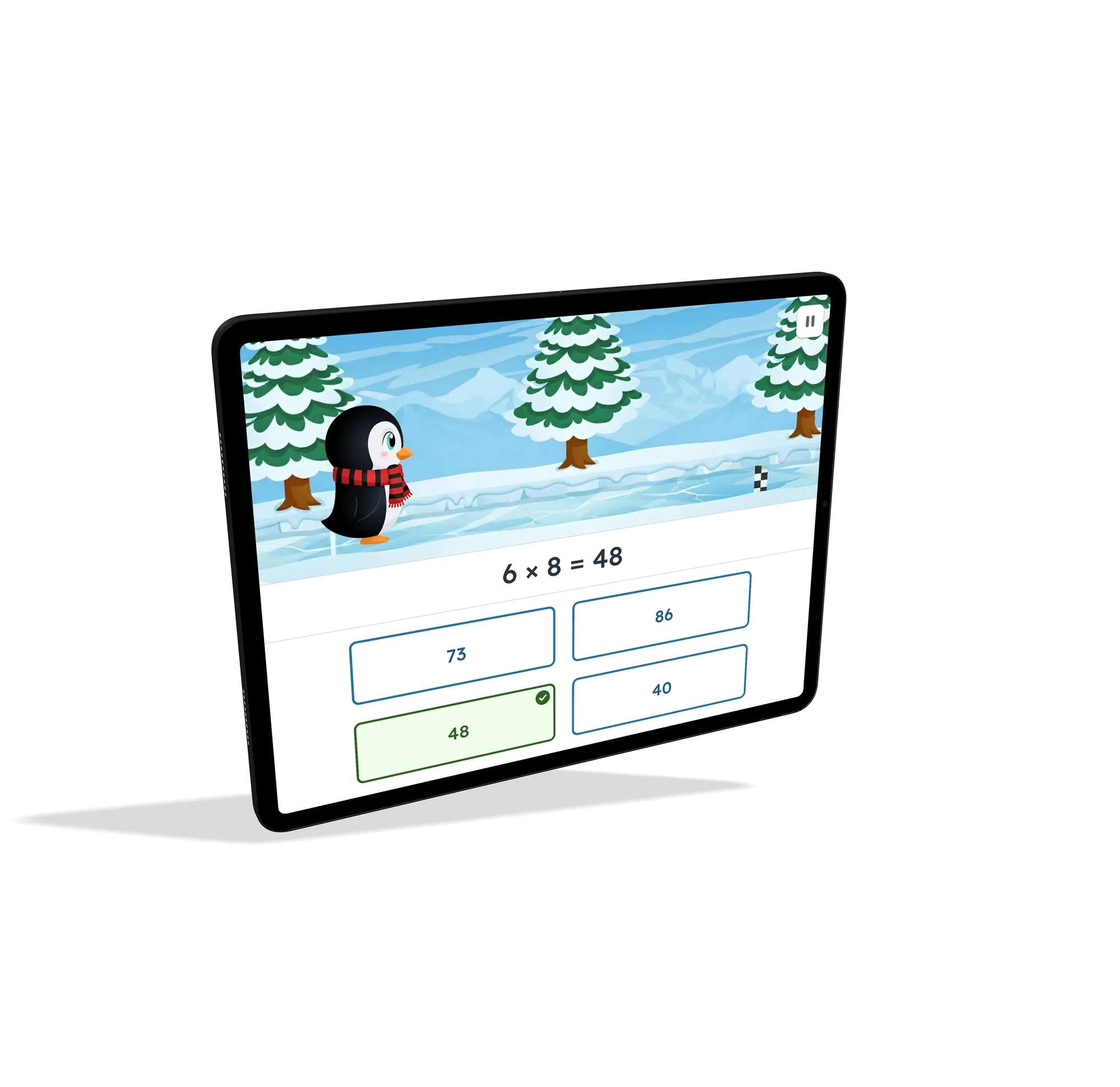
- The scalable architecture proved itself quickly. The Alpaca trainer was followed by a penguin-themed variant with largely AI-generated visuals and sounds. Same interaction type, different theme, more variety for students.
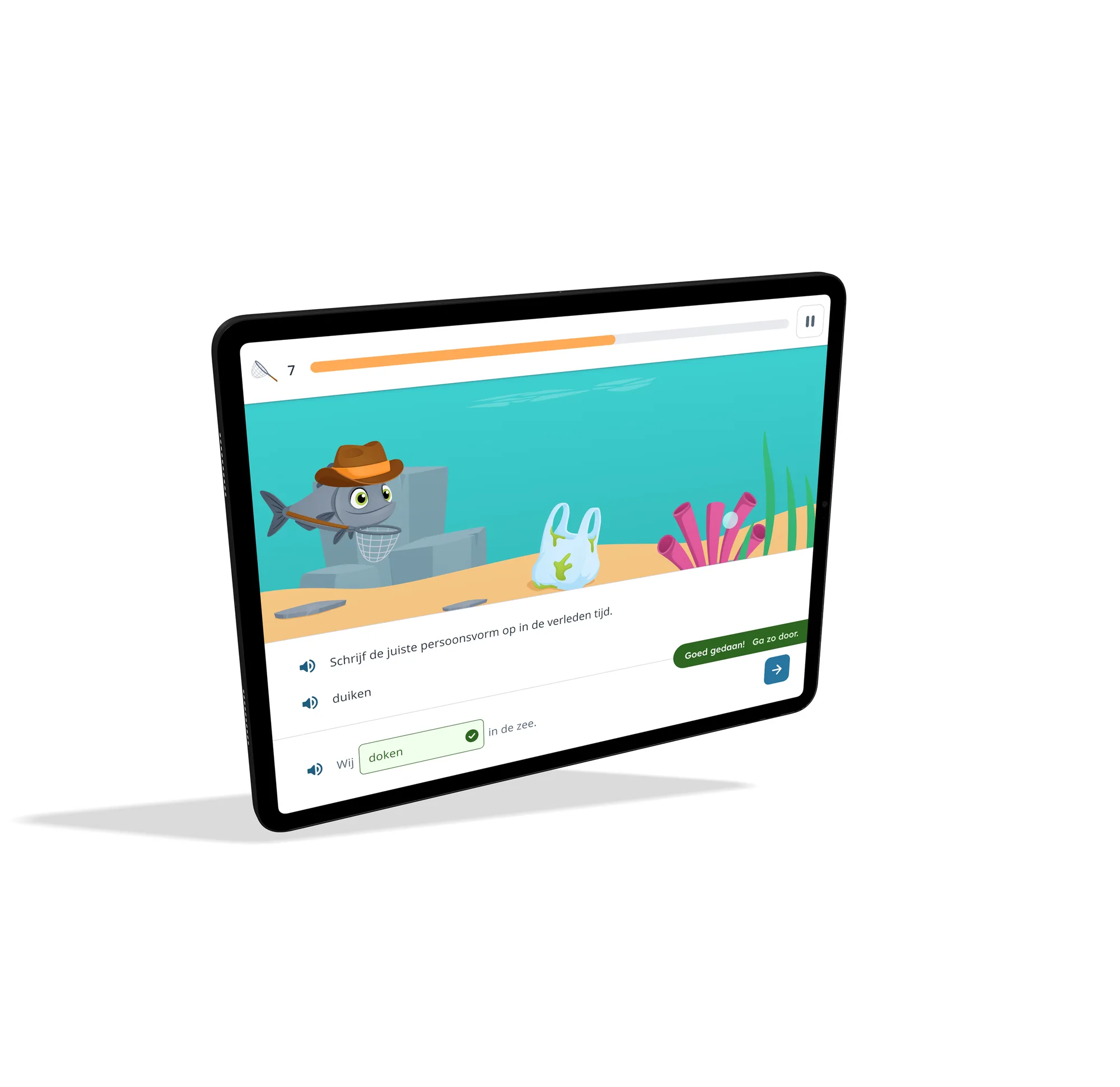
- At the same time, a fundamentally different trainer was developed: the Ocean Cleaners. Instead of automatization (tapping the correct answer as fast as possible via multiple choice), this one is about practicing at your own pace, with fill-in-the-blank answers. First application: verb spelling.
- The Ocean Cleaners introduced new design challenges. The input field had to work on Chromebooks with a physical keyboard and on iPads with an on-screen keyboard. That led to a density layer in the design system for adjusting element density per device. I also designed layouts for narrower screens. Both are ready for implementation.
Penguin Race: AI-generated theme, same interaction type
Ocean Cleaners: fill-in-the-blank for verb spelling
Results
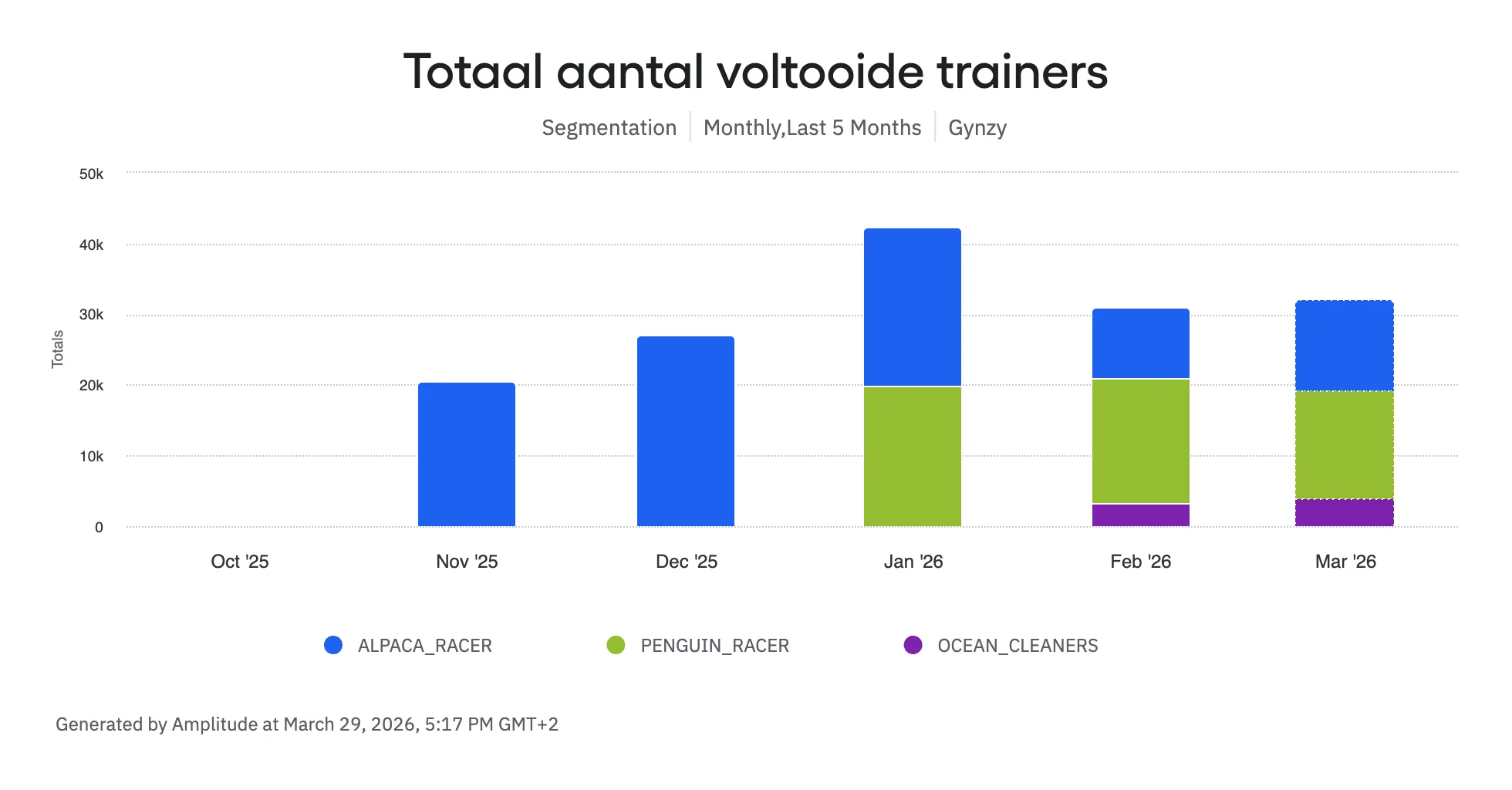
- Since launch in November 2025, over 130,000 unique students have completed a trainer session.
- In the busiest week, more than 220,000 trainer sessions were completed.
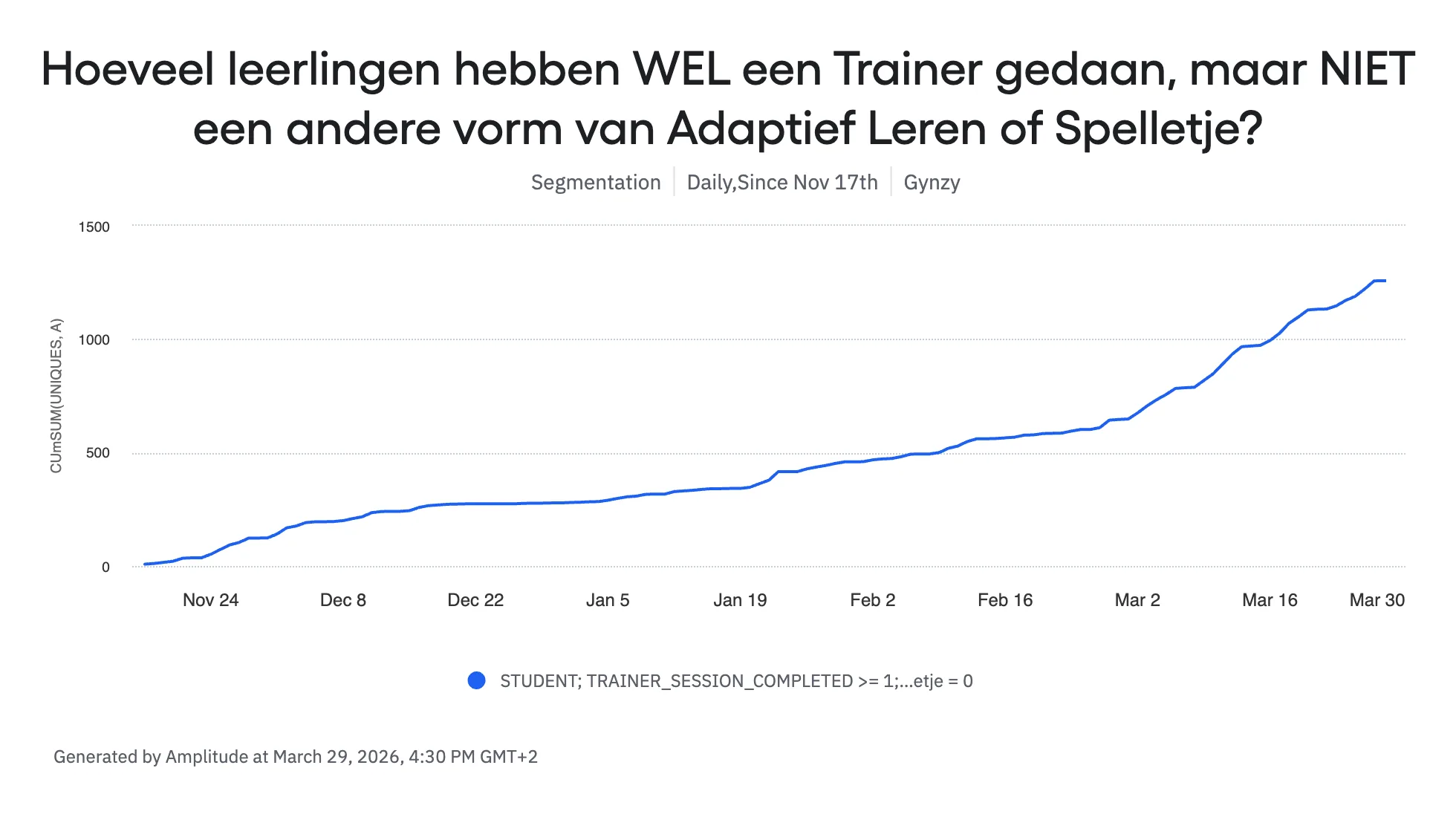
- Over 8,000 students use the Trainer as their only form of independent practice. Students we wouldn't have reached otherwise.
- The three trainers prove the scalable setup works: new themes, new interaction types, and new subject areas can be added without rewriting the foundation.
Note: The charts below are based on a 20% sample. The numbers above reflect estimated real-world totals.
Total completed trainer sessions (week over week)
Students using Trainer as their only form of independent practice